









Common Types of Online Gambling
Identify the gambling-like features in games and understand how they work
Gambling-like features in games
Loot boxes (names vary)

You pay real money (or in-game currency) for a random chance to get items (often skins or characters) that you think might give you an advantage or help enhance your game experience.
What does it look like?
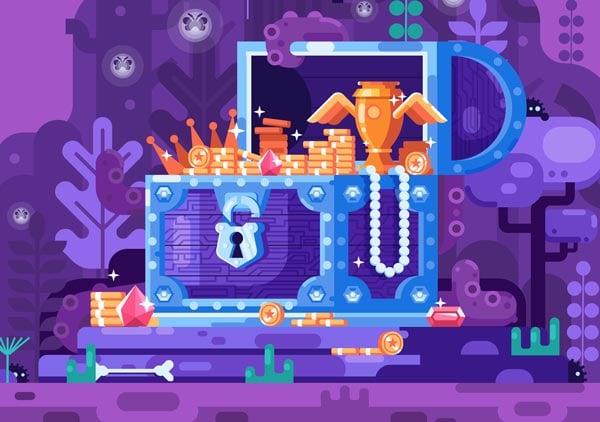
Spinning wheels, loot boxes, card packs, treasure chests or mystery boxes all resemble a kind of ‘lucky dip’. You don’t know what you are going to get until you’ve paid.
Some games will give you limited spins or openings for free, others are just pay to play with real currency or in-game currency (like tokens or coins that you collect during game-play).
Names can vary: ‘loot crate’, ‘treasure box’, ‘surprise box’, ‘reward chest’, ‘prize crate’, ‘mystery box’, ‘mystery chest’, ‘gift box’, ‘mystery prize’, or other lucky dips.
How Common it is?
Research with Australian young people found up to a third report buying loot boxes while gaming.
Almost one in five children who had engaged with loot boxes reporting they first opened them between ages 5-9. Up to 5% of people who spend money on loot boxes report ‘substantial spending’, sometimes up to $1,000 per month.
Why does it matter?
The excitement of “what will I get?” can be really engaging, but it’s worth being aware of how much you’re spending on chances rather than certainties.
Australian research shows people who spend money on loot boxes are more likely to experience gambling-related harm.
Loot boxes are psychologically akin to traditional gambling, triggering the brain reward system associated with addiction.
Gacha Systems
A progression system used in certain games where you collect characters or items through repeated random draws, based on Japanese ‘gachapon’ vending machines.
What does it look like?
Gacha mechanics are a type of loot box common in single-player fantasy games developed in Japan, China, South Korea, and other East-Asian regions. Gacha require real money to use, and provide random (or quasi-random) outcomes.
However, gacha games operate on a complex probabilistic model, that can take into account successive wins and adjust odds in real-time, and/or reward players after a number of unsuccessful pulls.
Players spin, roll or pull a lever in the hope of getting a new character or item (sometimes a new storyline) and most gacha games cannot be progressed without engaging in the gambling mechanic.
Gacha games require multiple currencies to gamble that typically requires purchasing at least one in-game currency with real money, making it difficult to monitor expenditure that can reach hundreds or thousands of dollars in only a matter of days.
How Common is it?
The Gacha system is common in fantasy free-to-play mobile games that are are available to all ages.
While the Australian classification system rates games with gacha as ‘M’, there is no limit, warning, or supervision of the age of gamers and they are gaining popularity in Australian children and young people.
Why does it matter?
Given gacha is a type of loot box, it is psychologically akin to traditional gambling, working on the brain reward system associated with addiction.
Given the complex currency system, it is difficult to monitor expenditure.
Gambling on games
Skin Betting

Dedicated websites allow trading of virtual items (skins or weapons) gained when playing video games.
Some websites also allow people to use these items as currency (instead of money) to place bets on e-sports.
What does it look like?
Virtual goods and cosmetics found in video games like skins and virtual weapons are most often vanity items that serve no other purpose in gaming than to change the look of a character or weapon. Other virtual goods may provide player advantages like power-ups or in fantasy games provide players with new storylines.
Virtual goods like skins or weapons are often found in loot boxes and can be earned via game-play or purchased using in-game currency. In addition to the enhanced look they may give game characters or an advantage they may give you in a game, these virtual goods can also have financial value on third party gambling websites, ranging from a few cents to many thousands of dollars.
Although not all goods can be traded or used for gambling, it is now common for rare and sought after skins to be used as currency on third-party unregulated gambling websites where they are sold, traded, or gambled on online marketplaces, such as illegal skin and e-sports gambling websites, for money. Some gamers may also gamble virtual goods privately with friends.
How Common is it?
In 2021, nine per cent of Australians who used illegal online gambling services were engaging in skin betting.
Skin gambling is also more popular with teenagers than adults. In NSW, 14.5 per cent of young people aged 12-17 years reported recent engagement in skin gambling, compared to one per cent of Australian adults.
Why does it matter?
Skin betting turns game items into real money, which can blur the line between gaming and gambling.
Young people engage with skin and other virtual goods gambling due to the increased social status in the gaming community and the opportunity to make money.
Third party websites used for skin betting rarely enforce age restrictions, making them easily accessible to young people.
Esports Betting

Esports are professional video game competitions where players or teams compete in various game genres for money and prizes.
What does it look like?
Esports events are professionally organised video game competitions between players or teams who compete in first-person shooter, sports, action, strategy, or collectible card games.
These competition events – where gamers play for money and prizes – are usually held in a live stadium with a live audience as well as televised via YouTube, Twitch or TV. Gamers may watch esports for entertainment and to learn strategies to improve their own gameplay.
As with any sport, many individuals also place bets on the outcome. In Australia, betting on esports is regulated as gambling, with esports betting now available from most services that offer sports or race betting to people over 18yrs of age
How Common is it?
Competitive gaming, known as Esports, is a rapidly growing multi-billion dollar industry that includes many gaming genres and titles.
Esports tournaments can attract millions of viewers. Some of the more popular games included in Esports competitions are League of Legends and Counter Strike Global Offensive. However, games commonly played by children including Fortnite and FIFA also hold e-sports competitions. Gambling on esports, despite being illegal for anyone under 18, is becoming more popular among children through unregulated illegal websites.
Why does it matter?
Children can easily access unlicensed esports betting sites and place bets using real money or skins.
Australian research has found that Esports betting using cash and skins is significantly associated with at-risk or problem gambling. With recent Esports skin bettors being over 3 times more likely to meet criteria for at-risk/problem gambling.
While Esport betting is legal for adults 18+ in Australia on most of the sports betting apps, there is a large illegal industry targeting children that can be accessed without age verification and where skins, virtual or real currency can be used to gamble. Watching eSports is also linked to increased interest in gambling for children.
Fantasy Sports Gambling

What does it look like?
Fantasy sports are structured online competitions where participants compete by creating and managing a virtual team of players from a particular professional sport (often AFL or Soccer).
The teams compete against other fantasy teams in a virtual league with the players’ real-life performances deciding who wins the prize pool of money. Fantasy sports gambling is regulated as gambling in Australia.
How Common is it?
Millions of people gamble on Fantasy Sports around the world and it has become a multi-billion dollar industry.
As with other sports betting, young males are particularly attracted to this type of gambling.
Why does it matter?
While gambling on fantasy sports with real money is only legal for adults 18 years and older, children can enter these competitions without real money and be exposed to gambling.
This and the heavy gambling advertising on fantasy sports sites can act as a gateway to more serious gambling and gambling harms later on.
Gaming & Gambling Gloassary
Understanding gambling features in your child's online games
🚨 Key Facts Every Parent Should Know
- About 80% of digital games now contain gambling features
- Up to 40% of adolescents report gambling on digital games
- These features are largely unregulated in Australia
- Many games with gambling features are specifically targeted at children
Common Gambling Features in Games
Loot Boxes
What Are They?
Digital mystery boxes containing random in-game items. They can look like treasure chests, crates, card packs, or even cute animals. Players either earn them through gameplay or purchase them with real money.
How Common?
Found in over 50% of top mobile games. Up to 1/3 of young people report buying loot boxes, with 1 in 5 first opening them between ages 5-9.
Why Be Concerned?
HIGH CONCERN- Children can't track spending easily
- Some spend up to $1,000+ per month
- Strong links to problem gambling behaviors
- Associated with psychological distress and financial harm
Social Casino Games
What Are They?
Games that simulate real casino gambling - pokies, poker, blackjack, roulette, bingo. Players can't win real money but can purchase virtual credits to keep playing.
How Common?
26% of 12-17 year olds have played social casino games. Most popular types:
- Wheel spinning (63%)
- Pokies (52%)
- Casino games (50%)
- Poker (41%)
- Bingo (37%)
Why Be Concerned?
HIGH CONCERN- Unrealistic winning odds give false expectations
- Can be as harmful as real gambling when hooked
- In-game purchases linked to problem gambling
- Normalizes gambling for children
Skin & Virtual Goods Betting
What Is It?
Using cosmetic items (skins) or virtual weapons as currency for gambling. These items can be worth anywhere from cents to thousands of dollars and are often traded or gambled on unregulated third-party websites.
How Common?
14.5% of teens (12-17) engage in skin gambling vs only 1% of adults. Most common in games like Counter-Strike and Overwatch.
Why Be Concerned?
HIGH CONCERN- Uses illegal, unregulated gambling sites
- No age verification on most sites
- Normalizes illegal gambling
- Can involve significant real money losses
Gacha Games
What Are They?
Games where players spend currency to "pull" or "spin" for random characters or items - like a digital vending machine. Popular in fantasy and anime-style games like Genshin Impact.
How Common?
Extremely popular worldwide, especially in mobile gaming. One of the biggest revenue sources in gaming history.
Why Be Concerned?
MEDIUM-HIGH CONCERN- Individual pulls seem cheap but add up quickly
- Some require hundreds of pulls for rare items
- Confusing odds and mechanics
- Predatory models that increase spending
E-Sports Betting & Fantasy Sports
What Are They?
E-Sports Betting: Wagering on competitive gaming tournaments (League of Legends, Counter-Strike, etc.)
Fantasy Sports: Creating virtual teams of real players and winning based on their real-world performance.
Legal Status in Australia
Both are regulated as gambling and restricted to 18+. However, illegal sites often target children with no age verification.
Why Be Concerned?
MEDIUM CONCERN- Legal sites require 18+ but illegal sites don't verify age
- Heavy marketing during gaming streams
- Blurs line between gaming and gambling
💡 What Can Parents Do?
- Talk openly with your children about these features
- Check game ratings and reviews before allowing downloads
- Set up parental controls on gaming accounts
- Monitor and limit in-game purchases
- Watch for signs of excessive spending or distress
- Educate children about the risks of gambling
- Report concerning content to relevant authorities
Social Casino Games & Simulated Gambling
Games that simulate casino experiences without offering real money prizes.
Social casino games are a type of simulated gambling that directly replicates casino gambling activities, such as roulette, pokies, poker, blackjack or bingo.
They are generally rated G or PG and can be downloaded as apps and on social networking sites, or accessed as demo games on real-money gambling websites.
Although players cannot win real money and only win in-game currency (like points, fake coins or jewels), many social casino games allow players to purchase virtual credits with real money to buy virtual credit and extend their playing time.
There are many different social casino games apps that are able to be downloaded straight onto your phones for easy and accessible game play.
A large study in the ACT just found that approximately 1 in 5 young men aged 18-24 yrs are playing social casino games. The most common types of social casino games played by 12-17yr olds are wheel spinning (62.8% of players), pokies (51.9%), casino games (49.8%), poker (41.0%) and bingo (37.1%).
Interest in social casino games remains into adulthood.
Simulated gambling accesses the same brain reward system as real gambling.
While you can’t win real money, these games can normalise gambling mechanics.
Research shows the odds of winning in social casino games are unrealistically high, giving young people an unrealistic idea of chances of winning when they consider real gambling later.
For some people, these gambling simulators are just as harmful as the real thing, especially when they get hooked into playing and start to buy tokens with real money to keep playing.